Scoliosis in New Braunfels
Move Beyond Scoliosis Pain with Specialized Physical Therapy in New Braunfels, TX
Scoliosis can influence how your entire body moves and functions, not just the alignment of your spine. Pain, muscle tightness, stiffness, fatigue, and uneven movement can make work, exercise, and everyday activities more challenging. While monitoring, bracing, exercise, and, when appropriate, surgery can be important parts of scoliosis care, some people continue to experience pain or limitations even after the spinal curve has been addressed.
At FeelFit Physical Therapy in New Braunfels, TX, we look beyond the curve to understand how your body is moving, responding, and protecting itself. For many of the people we treat, this means addressing a missing piece of the puzzle that may continue to contribute to symptoms even when the structural concern has already been evaluated or treated.
Understanding Scoliosis and How It Affects Your Body
Scoliosis is a condition in which the spine develops an abnormal sideways curvature, often with spinal rotation. These changes can affect posture, movement, muscle balance, and how the body functions during everyday activities.
Common scoliosis symptoms may include:
- Back or neck pain
- Muscle tightness or tension
- Uneven shoulders or hips
- Postural changes
- Stiffness
- Muscle fatigue
- Reduced mobility
- Difficulty maintaining comfortable positions
- Pain with prolonged standing or sitting
- Movement limitations during exercise or daily activities
Scoliosis affects everyone differently. Some people have a noticeable curve with little or no pain, while others experience persistent discomfort, tightness, or movement limitations. Because the spine, muscles, joints, and nervous system work together, managing scoliosis symptoms may require more than focusing on the curve itself.
How Physical Therapy Can Help With Scoliosis
Physical therapy can help appropriate patients improve movement, strength, mobility, muscular control, and tolerance to everyday activities. Treatment is not simply about trying to force the spine into a straighter position. Instead, care is based on your individual curve, symptoms, movement patterns, and functional needs.
At FeelFit Physical Therapy, we evaluate how your body moves and responds to different positions and activities while looking for physical factors that may be contributing to pain, stiffness, or protective muscular guarding.
Your treatment may focus on:
- Movement Retraining – Targeted exercises can improve coordination, movement efficiency, and control during everyday activities.
- Postural Assessment – We evaluate how your spine, pelvis, shoulders, and extremities work together during movement.
- Mobility Training – Specific techniques and exercises can address areas of restricted movement that may be affecting how your body moves around the curve.
- Strength and Stability – Progressive exercises can help improve muscular support, endurance, and control.
- Manual Therapy – When clinically appropriate, hands-on techniques may address soft tissue restrictions and areas of excessive muscular tension.
- Neuromuscular Retraining – Specific strategies can help your body develop more efficient movement patterns and reduce unnecessary protective responses.
- Personalized Home Strategies – Your home program is designed around your symptoms, goals, tolerance, and response to treatment.
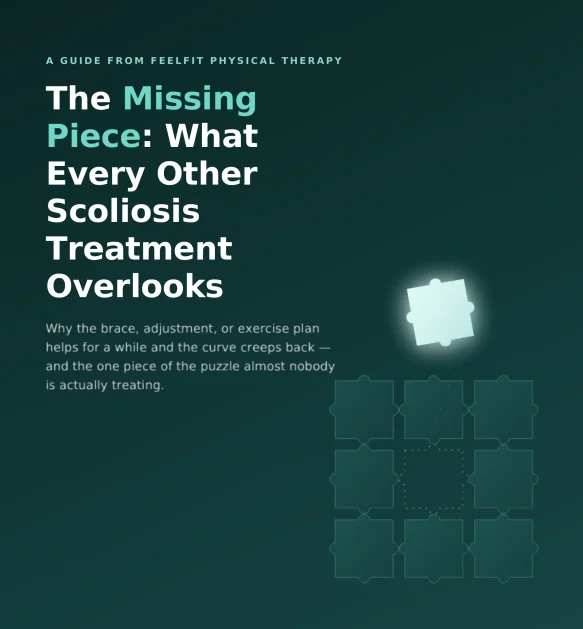
The Missing Piece in Scoliosis Recovery
Many people dealing with scoliosis have already tried different approaches. They may have had their curve monitored, worn a brace, completed exercise programs, received adjustments, or even undergone surgery when appropriate. For some individuals, these interventions provide significant or complete relief. If addressing the curve is what their body needed, that can be an excellent outcome.
But what happens when pain, tightness, or movement limitations continue? This is where we believe there may be another piece worth evaluating.
For some people we treat, persistent symptoms may coexist with protective muscular guarding, altered movement patterns, restricted mobility, and changes in how the body responds to movement. These responses can become established over time and may continue even after the original structural concern has been addressed.
Rather than focusing only on the curve, we look at the body as a connected system. Our goal is to determine whether physical factors and protective movement patterns may still be contributing to your symptoms and whether they can be addressed through individualized physical therapy.
Looking Beyond the Spinal Curve
Scoliosis is complex, and there is no single physical therapy approach that works for everyone. Some individuals may primarily need help with strength and movement control, while others may have significant muscular tension, mobility restrictions, postural adaptations, or movement patterns that deserve additional attention.
When appropriate, we may examine the relationship between the spine, pelvis, rib cage, shoulders, breathing mechanics, posture, and movement patterns. We also consider how your symptoms change with different positions and activities. For the people we treat who have these contributing factors, addressing this overlooked component may help improve comfort, movement, activity tolerance, and participation in everyday life.
I have been having problems with my neck and Jordan has been a miracle worker!!

Jordan is an amazing physical therapist! His technique is very helpful with my neck spine and headaches
What to Expect During Your Scoliosis Physical Therapy Evaluation
Your first visit is designed to help us understand your individual presentation rather than simply treating the diagnosis on your medical record. We consider your symptoms, history, spinal alignment, movement, strength, and response to different activities.
Your evaluation may include:
- Postural Assessment – Examine how your spine, shoulders, pelvis, and body are positioned during rest and movement.
- Movement Assessment – Identify compensations, restrictions, and inefficient movement patterns.
- Spinal and Joint Mobility – Assess relevant areas of mobility when clinically appropriate.
- Strength Assessment – Evaluate muscular strength, endurance, and stability.
- Breathing Assessment – Examine breathing mechanics and how the rib cage moves during respiration when appropriate.
- Neuromuscular Assessment – Examine coordination, muscular control, and movement strategies.
- Symptom Response – Identify how your pain and other symptoms change with different positions, movements, and activity levels.
These findings help us develop a treatment plan based on what your body needs rather than applying the same protocol to every person with scoliosis.
Frequently Asked Questions
Can physical therapy help if I have already tried bracing or exercise?
Physical therapy may provide an additional component of care when symptoms or movement limitations continue despite previous treatment. Rather than simply repeating the same exercises, we evaluate your current movement patterns, muscular function, mobility, and response to activity to determine what may need additional attention.
Can physical therapy help with scoliosis-related pain?
Physical therapy may help reduce pain and improve function by addressing factors such as muscular tension, mobility restrictions, weakness, movement coordination, and inefficient movement patterns. Your treatment plan will depend on your individual symptoms and clinical findings.
Can physical therapy help after scoliosis surgery?
Physical therapy may be an important part of rehabilitation after appropriate medical or surgical management. Once cleared by your medical team, therapy can focus on restoring movement, strength, muscular control, activity tolerance, and functional confidence based on your surgical history and recovery stage.
Meet Your Physical Therapist
Dr. Jordan Russell is a licensed physical therapist dedicated to helping patients with complex physical challenges regain movement and improve their quality of life. At FeelFit Physical Therapy in New Braunfels, Dr. Russell combines personalized assessment, hands-on clinical care, and progressive rehabilitation strategies to help patients better understand their bodies and work toward meaningful functional improvements.
Start Your Scoliosis Recovery in New Braunfels, TX
If you are managing scoliosis but still feel like something is missing, a personalized physical therapy evaluation may help identify physical factors and protective movement patterns that have not yet been addressed.
Contact FeelFit Physical Therapy in New Braunfels, TX, to schedule a consultation and learn whether our approach may be appropriate for your individual needs.